





We help businesses in Kennewick, Pasco, and Richland identify and claim valuable Research & Development (R&D) tax credits. Our CPA team ensures you maximize eligible credits while staying compliant with IRS guidelines.
We help businesses in Kennewick, Pasco, and Richland identify and claim valuable Research & Development (R&D) tax credits. Our CPA team ensures you maximize eligible credits while staying compliant with IRS guidelines.

Businesses that develop or improve products, processes, or software may qualify for R&D tax credits. To be eligible, activities must involve technical innovation, a process of experimentation, and a clear objective for improvement.
Qualified research expenses (QREs) may include:
R&D tax credits help reduce your overall tax liability and free up cash for reinvestment. Businesses can use these savings to fund innovation, improve operations, and support long-term growth.
Businesses in Washington State may qualify for additional R&D tax incentives depending on their activities and expenses. Our Tri-Cities CPA team helps ensure you take advantage of both federal and state opportunities.
Our CPA team works with businesses across Kennewick, Pasco, and Richland to identify qualifying activities, calculate eligible expenses, and maximize available tax credits. We handle the process from start to finish so you can focus on growing your business.
Delivered thousands of successful projects, optimizing tax strategies and maximizing returns for clients.
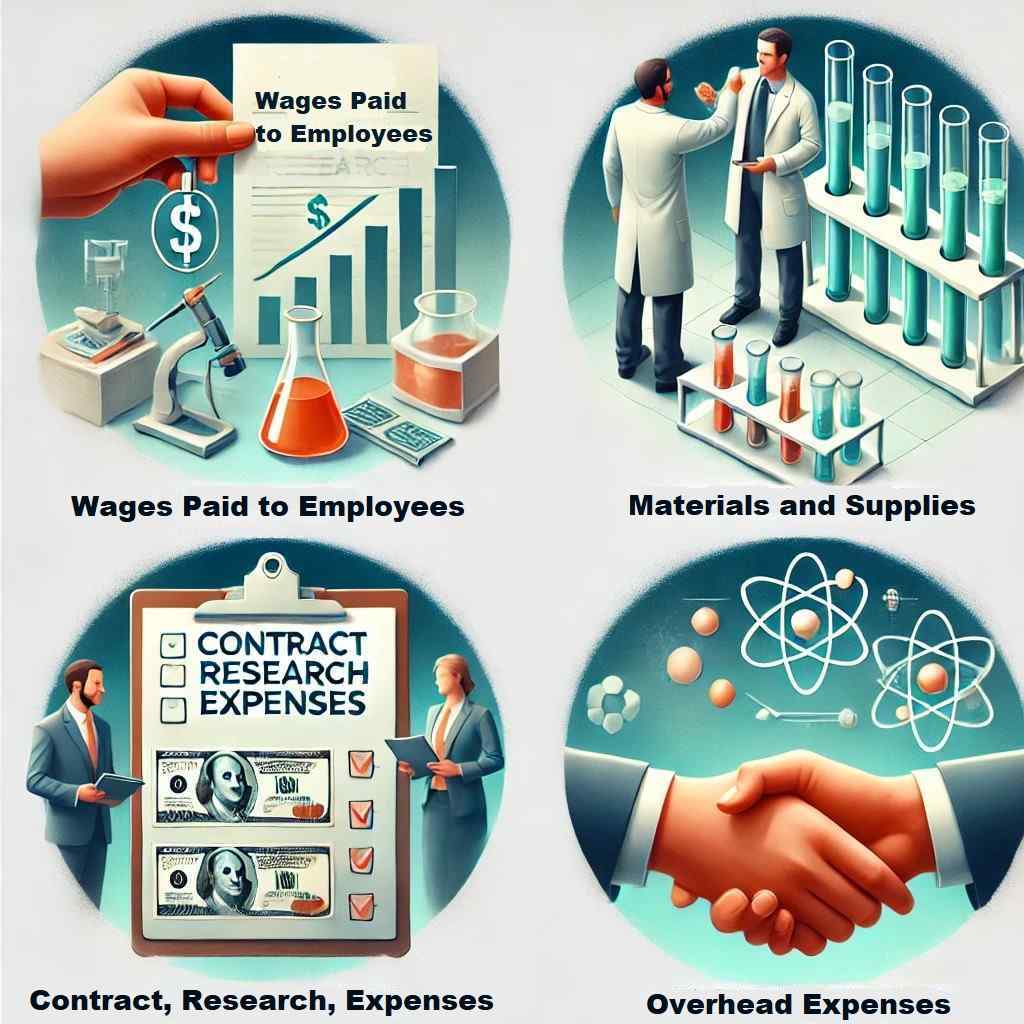
Businesses that develop or improve products, processes, or software may qualify for R&D tax credits. To be eligible, activities must involve technical innovation, a process of experimentation, and a clear objective for improvement.
Qualified research expenses (QREs) may include:


R&D tax credits help reduce your overall tax liability and free up cash for reinvestment. Businesses can use these savings to fund innovation, improve operations, and support long-term growth.
Businesses in Washington State may qualify for additional R&D tax incentives depending on their activities and expenses. Our Tri-Cities CPA team helps ensure you take advantage of both federal and state opportunities.

Our CPA team works with businesses across Kennewick, Pasco, and Richland to identify qualifying activities, calculate eligible expenses, and maximize available tax credits. We handle the process from start to finish so you can focus on growing your business.
The research and development (R&D) tax credit is a program initiated by the federal government to incentivize businesses to invest in innovative and technological research and development activities. The program was initially introduced in 1981 and has undergone several renewals, most recently in 2017 under the Tax Cuts and Jobs Act.
The R&D tax credit is a tax incentive program provided by the federal government to encourage businesses of all sizes and across various industries to invest in innovative and technological research and development activities. The credit is not restricted to profitable businesses and is available to startups, SMEs, and large corporations that engage in qualified research activities. The program was first introduced in 1981 and has been renewed multiple times since then, most recently under the Tax Cuts and Jobs Act of 2017.
The R&D tax credit is a tax incentive program created by the U.S. federal government to encourage businesses to invest in research and development activities. It provides tax savings to businesses that conduct eligible R&D activities, regardless of their size or industry. Expenses that qualify for the credit include costs related to the development or improvement of products, processes, software, or techniques involving a systematic process of experimentation, testing, or analysis.
Yes, a business can claim R&D tax credits for qualified expenses incurred both within and outside of the United States, as long as they are related to the development of products or processes intended for use in the U.S. market.
Calculating the research and development tax credit is done by figuring out what qualified research expenses (QREs) a business incurred during a given tax year. The credit rate is typically 20%, but it can vary depending on the unique circumstances of the taxpayer. There’s also a simplified method available for some businesses to use when calculating the credit.
To claim the R&D tax credit, a business must document and substantiate its QREs, including the nature and extent of the research activities, the amount and timing of the expenses, and the allocation of expenses between qualified and non-qualified activities. The documentation should be maintained and available for review by the IRS.
Yes, unused R&D tax credits can be carried forward for up to 20 years and used to offset future tax liabilities.
To get the most out of the R&D tax credit, a business should carefully identify and document all eligible research activities and expenses. This includes costs associated with developing new products, processes, or software, as well as expenses related to improving existing ones. Additionally, it’s important for the business to make sure that all documentation meets IRS requirements and is able to withstand an audit. By taking these steps, a business can maximize its R&D tax credit and reap the benefits of this valuable incentive.
The main difference between the R&D tax credit and the R&D expense deduction is how they reduce a business’s tax liability. The R&D tax credit directly lowers the amount of taxes owed, while the R&D expense deduction lowers the business’s taxable income. Generally, the R&D tax credit is more advantageous for businesses with limited or no taxable income, while the R&D expense deduction is more useful for those with higher taxable income.
Yes, many states and local governments offer their own R&D tax credits in addition to the federal credit. In Washington State, for example, businesses can claim a credit of up to 1.5% of their QREs incurred in the state, in addition to the federal credit. It’s important for businesses to research and understand the eligibility criteria and filing requirements for state and local R&D tax credits.
How We Determine Your R&D Tax Credit Eligibility
During our process, we evaluate your business activities to determine eligibility for R&D tax credits. This may include reviewing:


R&D tax credits are based on qualified research expenses, including wages, materials, and contract research. Our CPA team calculates your eligible credits and ensures proper documentation so you can maximize savings while remaining compliant.
Qualified startups may be able to apply R&D tax credits toward payroll taxes, reducing their overall tax burden. This can provide significant savings for growing businesses. Our team helps determine eligibility and ensures proper filing to maximize available credits.

During our process, we evaluate your business activities to determine eligibility for R&D tax credits.
This may include reviewing:
R&D tax credits are based on qualified research expenses, including wages, materials, and contract research. Our CPA team calculates your eligible credits and ensures proper documentation so you can maximize savings while remaining compliant.
Qualified startups may be able to apply R&D tax credits toward payroll taxes, reducing their overall tax burden. This can provide significant savings for growing businesses. Our team helps determine eligibility and ensures proper filing to maximize available credits.
The research and development (R&D) tax credit is a program initiated by the federal government to incentivize businesses to invest in innovative and technological research and development activities. The program was initially introduced in 1981 and has undergone several renewals, most recently in 2017 under the Tax Cuts and Jobs Act.
Businesses that engage in research and development activities may be eligible for the federal research and development (R&D) tax credit. This credit allows eligible businesses to offset a portion of their federal income tax liability based on their qualified R&D expenses. Additionally, some states, including Washington, offer their own R&D tax credits, which can provide additional tax savings for businesses.
The federal R&D tax credit allows eligible businesses to claim a credit equal to a percentage of their qualified R&D expenses. The credit can be used to offset federal income tax liability, and any unused credit can be carried forward to future tax years.
Yes, businesses can claim both state and federal R&D tax credits, as long as they meet the eligibility requirements for each credit.
To be eligible for R&D tax credits, the research and development activities must meet certain criteria set forth by the IRS and state tax agencies. The activities must be conducted for the purpose of developing or improving a product, process, software, or formula. Additionally, the activities must involve a process of experimentation that is intended to eliminate technical uncertainty.
To substantiate their R&D expenses, businesses must maintain detailed records of their R&D activities, including project plans, design documents, lab notebooks, test results, and other relevant documentation. These records should be sufficient to demonstrate that the activities meet the eligibility requirements for R&D tax credits.
Research and development expenses can be deducted as ordinary business expenses, but they may also be eligible for R&D tax credits, which can provide additional tax savings for businesses.
The amount of R&D expenses that can be claimed as tax credits or deductions is subject to certain limitations set forth by the IRS and state tax agencies. However, these limitations are generally based on the size of the business and the amount of qualified R&D expenses incurred.
To determine whether a particular expense qualifies as R&D for tax purposes, businesses should consult with a qualified tax professional. The eligibility criteria for R&D tax credits can be complex, and it is important to ensure that all expenses claimed meet the necessary requirements.
The research and development tax credit and the research and experimentation (R&E) tax credit are two different names for the same credit. Both terms refer to the federal tax credit available to eligible businesses that engage in qualified research and development activities.
Startups and small businesses may be eligible for additional tax benefits related to R&D, including the ability to offset payroll taxes with R&D tax credits. Additionally, some states offer special incentives for startups and small businesses, such as the Washington State R&D tax credit. It is important for these businesses to work with a qualified tax professional to ensure they are taking advantage of all available tax benefits.
The research and development (R&D) tax credit is a program initiated by the federal government to incentivize businesses to invest in innovative and technological research and development activities. The program was initially introduced in 1981 and has undergone several renewals, most recently in 2017 under the Tax Cuts and Jobs Act.
Research and development expenses can be deducted as ordinary business expenses, but they may also be eligible for R&D tax credits, which can provide additional tax savings for businesses.
Businesses that engage in research and development activities may be eligible for the federal research and development (R&D) tax credit. This credit allows eligible businesses to offset a portion of their federal income tax liability based on their qualified R&D expenses. Additionally, some states, including Washington, offer their own R&D tax credits, which can provide additional tax savings for businesses.
The amount of R&D expenses that can be claimed as tax credits or deductions is subject to certain limitations set forth by the IRS and state tax agencies. However, these limitations are generally based on the size of the business and the amount of qualified R&D expenses incurred.
The federal R&D tax credit allows eligible businesses to claim a credit equal to a percentage of their qualified R&D expenses. The credit can be used to offset federal income tax liability, and any unused credit can be carried forward to future tax years.
To determine whether a particular expense qualifies as R&D for tax purposes, businesses should consult with a qualified tax professional. The eligibility criteria for R&D tax credits can be complex, and it is important to ensure that all expenses claimed meet the necessary requirements.
Yes, businesses can claim both state and federal R&D tax credits, as long as they meet the eligibility requirements for each credit.
The research and development tax credit and the research and experimentation (R&E) tax credit are two different names for the same credit. Both terms refer to the federal tax credit available to eligible businesses that engage in qualified research and development activities.
To be eligible for R&D tax credits, the research and development activities must meet certain criteria set forth by the IRS and state tax agencies. The activities must be conducted for the purpose of developing or improving a product, process, software, or formula. Additionally, the activities must involve a process of experimentation that is intended to eliminate technical uncertainty.
Startups and small businesses may be eligible for additional tax benefits related to R&D, including the ability to offset payroll taxes with R&D tax credits. Additionally, some states offer special incentives for startups and small businesses, such as the Washington State R&D tax credit. It is important for these businesses to work with a qualified tax professional to ensure they are taking advantage of all available tax benefits.
To substantiate their R&D expenses, businesses must maintain detailed records of their R&D activities, including project plans, design documents, lab notebooks, test results, and other relevant documentation. These records should be sufficient to demonstrate that the activities meet the eligibility requirements for R&D tax credits.
Delivered thousands of successful projects, optimizing tax strategies and maximizing returns for clients.